Studying and practicing photographer from the North East of England. Studying at CCAD (Cleveland college of Art and Design) Hartlepool campus.
Example of my work
Headland/ Hometown
Wednesday, 28 May 2014
Evaluation
I completed the assignment by choosing to take photos of landscape but also incorporating, if not focusing more on the seascape side of it. To take these photos I used a field camera and 5 by 4 film. I used a light meter to measure the light (ISO) of the areas where I was shooting and set the aperture accordingly on the camera.
Some problems I had were getting used to the camera at first and also loading the 5 by 4 film in the dark and then also developing it all in complete darkness and without the clock working and on my own. Some of my images didn't work due to being exposed to light after taking the shot on the film so as a result I went out and retook my images on my own. I went out three times, the first two I took three photos each time, both of which I was with other students from my class and out of the six only one worked well, another only just, the rest (4) didn't work. On the third shoot where I retook them I shot another eight and this time only one didn't work, which I was very pleased with as I had took them by myself.
I could improve my work by taking more time in the dark room to print my images and therefore get a better result of them being printed. I am happy with the photos that I took. New skills I have learned are using the field camera and 5 by 4 film as I have never used these before. I have developed my ability in the dark room more and re-jogged my memory on using the equipment. I have responded well from advice and guidance from peers and tutors. I have took on board what they have said and answered with when I have asked them questions.
I consider my work to be a success and meet the requirements of the brief as I have completed everything given by the brief. I have took photos, done contact sheets, printed five photos, written a blog and everything else asked. I'm not too sure what has inspired and influenced me, if anything, I took photos of the landscape including the sea because I have took plenty of shots like that before in my own time so I just did something I know and like and this is the reasoning and concept behind my work.
The assignment brief challenged me because I had never used the field camera or the film before therefore I had to get used to using them, which I have now. Upon reflection I don't think I would do anything much different as I liked the photos I took however I would work more on getting the final prints improved slightly and trying to get them as good as I can get instead of being happy with how they are and leaving it.
Landscape - Images/ Printing
The day after I printed my first picture I went out by myself and shot another 8 pictures of the same area as before, this brought the amount of pictures I had took up to 14 overall, including ones that didn't work. I was pleased with the eight I had last took because after developing them I could see that only one hadn't worked, which was a big improvement. After I had developed them, rinsed and dried them I managed to get one final printed in the same day as I stayed back till about 9. On the following day I carried on printing in the dark room and was there the entire day because of this I was able to get the rest of my prints done, making the total up to five final prints.


This machine you can simply place your image(paper) through and it does everything for you, to even rinsing and drying as well as developing the image. This is a good time saver as you are able to get more done during the day.
Saturday, 24 May 2014
Landscape - Dark Room Printing
Recently I went in to the dark room to begin printing the one image that I have that worked. I started on the enlarger and did a test print and print. I then went on to the De-veer, which is a bigger enlarger and can be used to print much bigger images on larger pieces of paper. I began on this by printing full images on the 12 by 16 paper to get the border right and also the timing of how long the light needs to be on for. After a few goes and tries of this I did a test strip on the De-veer first starting with 5 second intervals then moving up to 15 seconds and this time using a number 3 filter, which was advised as I was having trouble making the sky darker without making the bottom of the picture where the wall is too dark. Before I used the filter I was burning in the sky. I first did the whole image for 10 seconds then did another 10 seconds burning the sky in and a second go of burning I did the same but added on another 5 seconds of burning in to the sky.
Monday, 12 May 2014
Landscape - Henry Wessel
Another American photographer I have looked at is Henry Wessel. In my opinion from these three images here I have chosen, I think he, Henry, like symmetry within his images, certainly some, like a body of work. I decided this because of the symmetry used in these images, the way the people, both images using four people, are placed and lined up. They each have a pose which could be natural and tries to appear natural but you are able to tell that they have been posed and positioned to be stood as they are.


Landscape - Joe Deal
This American photographer, Joe Deal, takes images of the landscape in a few varying ways. For example the first image is of a suburban house in America, a human building put on to the landscape, our existence on the land. The second image shows the land without any buildings but still with human interaction, the land hasn't been left alone, we(humans) are still using the land to survive, growing crops, manipulating and abusing the land. Finally the last image is of the sea, Seascape. It depicts humans using the land to relax and have fun by enjoying themselves. His images are all about human interactions with the landscape and the different ways in which we use the landscape.


Landscape - Printing, Dark Room
After developing and processing my film I began test strips and after finding the right amount of seconds to use to print my image I tested it on 20 seconds. On Monday I will continue to print this image and print it on a bigger scale, 12 by 16 instead of the size of the test strips. Although I only have two out of six images I am happy with this image as it seems to be a good enough exposure for me to work with. I don't think the image itself is that great or one of the best ones I took for this module however I am glad it has worked so I can work on this one and re-jog my memory of the dark room so when I come to print my other images, which will have hopefully worked and be better I will be quicker in the dark room as I will know more.

Landscape - Images
These are my six images after developing, out of which I only managed to get two as the others had been exposed to light, once the film had been used taking a photograph, before development. I will use the two images that have worked and start printing tests on them and depending on how well they work I will print them on a larger scale, of which the brief requires. (12 by 16) I am hoping to shoot some more images as my first and second shoots haven't turned out as successful as I only have 2 images out of six.


Sunday, 11 May 2014
Landscape - Developing
The first image shows the three tanks where the developer, stop and fixer is. To begin with you place the images individually in frames and then hang them up on to a cage (second image). You do this in pitch black so no light gets on to the film and ruins the images. The first chemical you use is the developer which you place your images in for 15 minutes, gauging on the temperature being 21 degrees. You agitate for the first minute non stop, dipping the cage up and down in the developer and then for ten seconds every minute. Once this is done you place your film in the second tank which is the stop, this does just that, stops the developer from working on your images. You place your film in this tank for thirty seconds and constantly agitate. Finally you put the cage in the third and last tank, which is the fixer, for five minutes with constant agitation again. This allows your image to stay on the film. Once all three tanks have been used it is okay for the film to be out in to the light where you put the film to wash for 20 minutes and then finally dry.
Fixer;"Photographic fixer is a mix of chemicals used in the final step in the photographic processing of film or paper. The fixer stabilises the image, removing the unexposedsilver halide remaining on the photographic film or photographic paper, leaving behind the reduced metallic silver that forms the image, making it insensitive to further action by light. Without fixing, the remaining silver halide would quickly darken and cause fogging of the image. The most common salts used are sodium thiosulfate—commonly called hypo—and ammonium thiosulfate—commonly used in modern rapid fixer formulae."

Fixer;"Photographic fixer is a mix of chemicals used in the final step in the photographic processing of film or paper. The fixer stabilises the image, removing the unexposedsilver halide remaining on the photographic film or photographic paper, leaving behind the reduced metallic silver that forms the image, making it insensitive to further action by light. Without fixing, the remaining silver halide would quickly darken and cause fogging of the image. The most common salts used are sodium thiosulfate—commonly called hypo—and ammonium thiosulfate—commonly used in modern rapid fixer formulae."
Friday, 9 May 2014
Landscape - Images, Developing
I have developed all six of my images this morning and at first glance none of them have came through, they are all black. Some of them have a clear edge which means that they have been fine in the dark slide and no light has got to them but it is after they have been took out that they have ben exposed to too much light before being developed and processed. In the other cases where the image/slide is all black it has been whilst the film is in the dark slide that light has passed through and onto the film causing it to go black and fog. After looking at them again I have noticed that on two of my films I can see a slight image on each, as they are both dark, meaning when printed they will be both light on the image signalling that hey have been over exposed when taking the image as too much light has gone to the film.
Landscape - Taking pictures
Last Friday I went out with Donna using the field camera taking shots over the Marina around Hartlepool. I took three film slides out and Donna took four. I retook one of my pictures from last time as a test incase it hadn't worked and also to re-jog both our memories on using the camera, so if the image went wrong it would be okay as I did already have one from previously. We stayed in the same area and didn't stray too far from the place as we liked the place for images we had chosen to take whilst we where there. I took images of the water with the town (Hartlepool) in the background and also one of the sea from the other side at a different angle. I will be developing my six photos today and start printing them. Fingers crossed some will come through.
Thursday, 8 May 2014
Tuesday, 22 April 2014
Professional Studies - Gathering info
Here is an example of how I gathered some information for my report. I simply asked anyone to comment on the camera and/or equipment they used. I should have done this earlier as with this I find it to be very successful and have got good results compared with when I asked a few questions on two or more photography pages I got about 3 replies from all of them were here with just the one group/page I have been a lot more productive and helpful answers. I found these results https://www.facebook.com/groups/141232682675643/461274704004771/?notif_t=group_comment This image is just of the moment, I expect a few more answers as the day goes on.
Professional Studies - Equipment
This image was taken by Jennifer Khordi of the Atlantic Ocean at Corson's Inlet state park USA. It was took using a Canon 6D Rokinon 14mm 2.8 ISO 1600, 15 seconds. This image was found here https://www.facebook.com/groups/141232682675643/

This next image was taken by Colin Palmer and was in Grotfjord Tromso Norway. He used a Canon 10 - 22mm lens at 10mm. This image was found also at https://www.facebook.com/groups/141232682675643/

Monday, 21 April 2014
Professional Studies
For professional studies I had always thought to write and report on being a professional landscape photographer as this is the career I would like to delve into and focus on most in my career. However due to lack of responses and more than one person telling me I have picked a hard subject to write about I wish I had given it more thought about what I could write about, maybe still including landscape photography but not on such a broad sense and possibly focus on something more particular. I wish I had given myself more time as I do like the subject I have chosen as I thought at the time and still do that it would help me for the future, as I said, I would like to do landscape photography professionally. Instead of just using internet sources I hope to learn from my mistake and next year use book sources early so I have the information and don't need to worry if it happens to fall like this again were the deadline is just after we come back from a break where I haven't got time to do any of the work from libraries. Once I have done this report it will give me an idea and an insight now I'll have done one so next year I shall understand better what is expected of me and what is wanted, within my report. I will be able to plan better and know what to do more than I do now as I'm not too sure.
Professional - Being professional taking images - ethics
Not long into starting this course we had a visit from two local police, a policewoman and policeman. They talked about taking photographs in public and the ethics that come with that and also issues, problems and situations regarding public that go alongside taking images outside for all to see. They told us some reason why we might get asked by security, for example, what we're doing and to stop. However they haven't got the authority to stop us as we're allowed to take photographs as long as we aren't on their (company's) private land they can't stop us. They may ask us to stop and fair enough but they haven't got the authority to tell us and make us delete our images, we are allowed to keep them. They also talked about civilians talking to us while we're out and about and that they might ask us what we're doing and if we're allowed, have permission and especially if it involves being around children, even if we aren't actually photographing children but happen to be near and in the area. They said we should just be careful of how we go about but that it isn't against the law to take photographs out in public except images of the army.
Professional Studies
Here are some of the sites I have been using to try and get some answers to my questions.
https://www.facebook.com/groups/LetsTalkPhotography/
https://www.facebook.com/groups/141232682675643/
https://www.facebook.com/groups/TeesValleyPhotography/
https://www.facebook.com/groups/LetsTalkPhotography/
https://www.facebook.com/groups/141232682675643/
https://www.facebook.com/groups/TeesValleyPhotography/
Professional Studies - Report
With the assignment for professional studies I am finding it difficult as where to start as I have some information which will get me started but I find it hard to even get my head around as I haven't done anything like this before, I can't remember ever writing a report and though I have read the handouts and the booklet I was given it still is quite hard to me to have to piece it all together and the different style of writing as this isn't an essay. Also I have to try and remember the style of writing for the report whether it is passive or active as I will have to stick to only one for the entire report. All this is new to me but will be a good learning curve for the future and definitely for next year.
Professional Studies Interviews
For my report I looked up a few photographers online such as Leigh Rebecca and Peter Watson, I focussed on local and national photographers mainly but will include international as well. I searched for landscape photographers and contacted them via their website pages and asked them a few questions, interview questions. As I didn't receive that many replies I thought of asking Photographers on social media sites such as facebook where they go and share images they have took and talk about photography in general and about their work. With this however I also haven't received too many replies unfortunately.
Professional Studies - report ideas
For my report I had decided to write it on Landscape Photography, with possibly also Seascape as people include them two together. After first contacting two professional photographers earlier about 2 months ago I ended up leaving it til probably a bit too late to contact other photographer as I haven't heard anything back apart from one or two photographers. Though as I'm doing this at home I am am having trouble with the internet going off every so often and then I have to wait for that again by turning it off at the switch and waiting a few seconds to switch it back on again. Although this is very annoying I am trying to get through and contact people, so after not being very successful with contacting photographers through their pages I decided to use facebook as they have pages for local photographers and national ones and then also international so I thought this would be a great place to ask questions as there would be a vast range of diverse photographers from all over however though I have had some response I haven't had the amount I was hoping for so I am just going to have to use what I can and what I've got. Though this isn't the first time this has happened where I've left it a bit late then things crop up like technology not working for me when I need it most I really have learnt this time and if I do pass this year I am going to do the work on time and though I though I started well by contacting two photographers in time I let the time slip by keep thinking it will be okay and I'll be alright. I want to do well and so having a look at these sites and photographers gives me a good insight into the standards that are set and that I have to work on to become as there is very good competition out there and if I want to focus most on Landscape/Seascape Photography I have to work hard, practice, learn all I can and up my game to be able to call myself a photographer.
Professional Studies
This was the poster for the 2014 Photography Show that I and my group went with to Birmingham at the NEC. This day was a great eye opener not just to all the things relating to photography that were there but just the sheer number of people who either did photography or had something to do in relation to it like creating the books to have your images in. It was a good day and I'm glad I went.
Friday, 18 April 2014
Professional Studies - Info/work sheets
Monday, 14 April 2014
Professional Studies NEC in Birmingham trip
On the 3rd of March 2014 I visited the NEC in Birmingham with my class and lecturers. We went to the 'Photography Show' where they had all different kinds of stalls and people their buying, selling, promoting their own stuff. It was amazing to see how many people were there and interested in photography, it was overwhelming to me and we went on the last day and it was on for I think 4 days. It was incredible. I went round with a few people trying to take it all in and get something from it, there was so much going on I couldn't believe it, I didn't know what to expect upon arrival and it was great to see as it was an eye opener for me. All of the various things within photography you can do was there including even costumes for shoots as well as the expected things like lenses, cameras, accessories like soft boxes and also companies that print you images for you in to books. It was a good experience to go and I'm glad I did. The image below is of all the leaflets, books and cards I got of people's businesses and also the big names that were there like Canon, Fujifilm, Nikon, Panasonic etc. It was also good as well as finding out about all these companies and the new tech out and networking it was also good because there were talks on about certain things.
Thursday, 10 April 2014
Professional Studies
A few weeks ago my lecturer brought her camera equipment, everything she fits into a bag, all the essentials that she uses and needs to take on a job. She was saying to pick what you think is best for your own work and the best equipment needed to suite your specialist choice in a photography career or something that can be versatile and what you can use for all jobs that you want to. This gave me a great insight and was an eye opener and made me begin to think what I wanted in camera equipment and set up for jobs that I may do in my future.
Landscape - Bernd and Hilla Becher
A married team of photographers and artists Bernd and Hilla Becher are most known for creating typography and a series of photographs of structures and industrial buildings. In 2004 they were winners of the Hasselblad award as they were described as being some of the most influential artists of our time. They take photographs from different angles of a building they have picked and put the selected images together as a body of work focussing on one subject. Their images are documentary and keep record of the areas they are in. They have worked like this for over 40 years. Unfortunately Bernhard Becher died on June 22nd 2007 but Hilla still continues with their work and in the same style still by using already existing photographs they have previously shot together.
All images found here;http://poulwebb.blogspot.co.uk/2011/01/bernd-and-hilla-becher-photography.html
Sunday, 6 April 2014
Landscape
Whilst researching a little on landscapes and more specifically the sea and beach shots (seascapes) I found this Landscape Photography Magazine and thought I would share it so if anyone is interested you can have a look. The link is below;
It has, what looks to be, a great range delivering various sections to accommodate people's own interests and needs. It has a free download for one of its copies and has competitions monthly.
Friday, 4 April 2014
Landscape
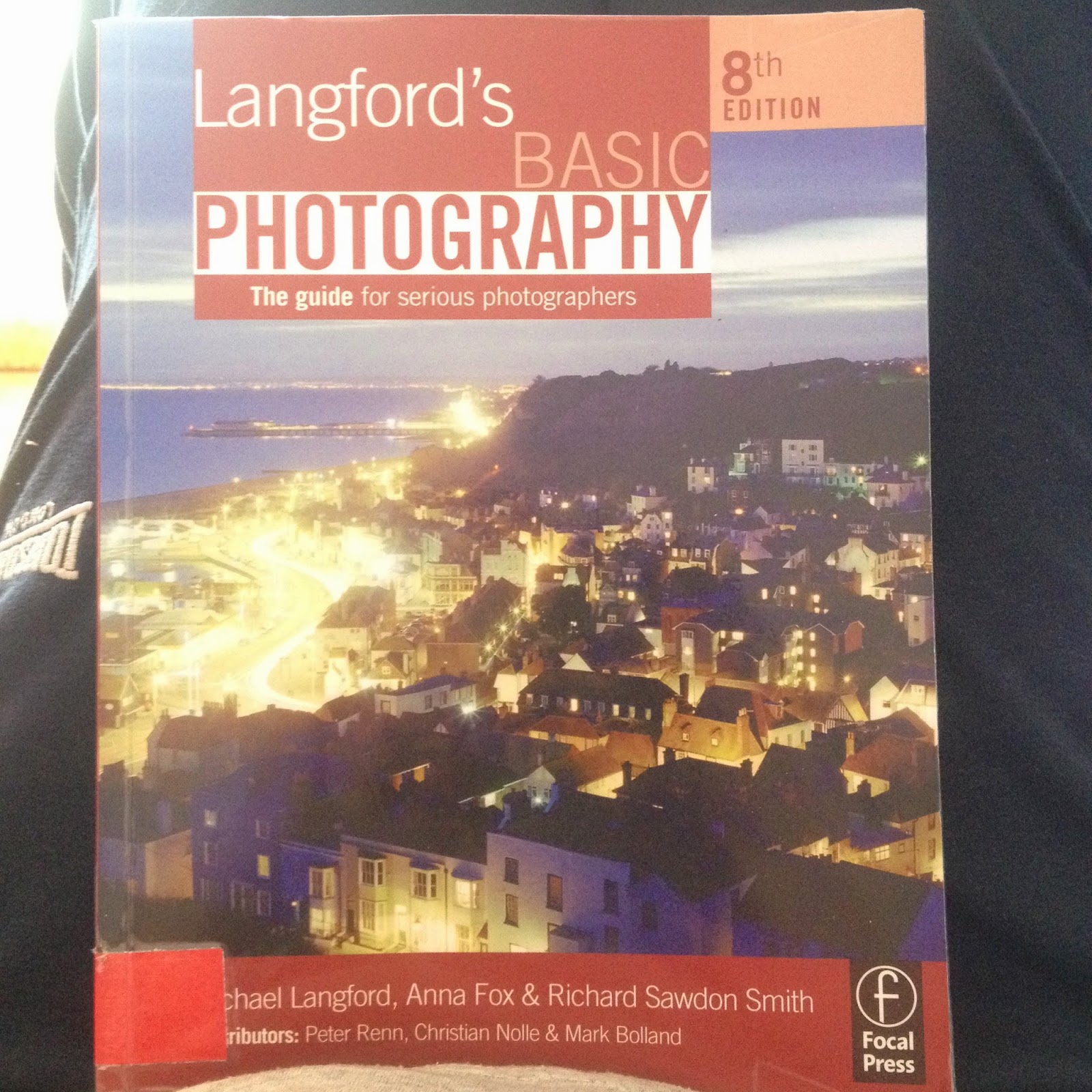
For this project it was advised by one of the lecturers to read Langford's book on Basic Photography' 8th edition for chapter 10 which was on exposures as we were using new types of cameras to us and also shooting outside where we would be using light reader measurements. After looking through this book and reading through the chapter I found it very useful and also the glossary in the back where it tells you absolutely everything about any word relating to photography, cameras, equipment etc I found this hugely helpful as well as it helped me remember words as I could look at the book for reference.
Thursday, 3 April 2014
Landscape - 1st shoot
Today I went out with some people from my course and did my first shoot using the field camera. They helped me to take my images and set up the camera. I took images around and focusing on the sea. I took out 3 slides, for 3 images however I double exposed my first image when I tried to take my second as I realised, due to the system I chose were if the black side of the slide is showing I have used the film and took an image on it. Once I noticed this I put in a new slide took my second image and then went back to retake my first image on my third slide. After each image is taken, as well as Turning the slide to the back side I also put a tick on the masking tape so I can easily tell and identify a slide that has been used. I also write on the Fstop and shutter speed which for both were F11 and at 125.
Landscape - Stephen Shore
Stephen Shore is an American photographer who is known for his quite common, mundane scenes and objects set in the USA and also for his use of colour photography in the 60s, 70s and onwards. He started doing photography at a very early age and even had a little darkroom kit at the tender age of 6. At ten he had a book by Walker Evans and he later presented his photographs to Edward Steichen at age 14 who at the time was working at the Museum of Modern Art (MoMA) as the curator. When Shore was 17 he was introduced to Andy Warhol and began hanging out at Warhol's studio, famously known as 'the Factory'. Whilst there he photographed the famous people who used to visit the Factory as well as Warhol himself. I have picked the image below as I liked the look of it because of the quite cliched look of it, blue skies, little white cloud, mountains in the background and a clear road, which This type of shot in america for this landscape is always near enough the same however this is different as, in my opinion, and what I think would be normally is the image would be taken from the centre of the road with the white line in the middle going down the frame all the way down and used for perspective whereas here the image is taken to the side of the road and is focused more on the clouds as the centre and focus of the image. In the image further down there are two poles and they are equally on each side with even amounts of each side.
The above image is found on the link below and taken by Stephen Shore.
http://www.bbc.co.uk/photography/genius/gallery/shore.shtml
The above image is found on the link below and taken by Stephen Shore.
http://www.bbc.co.uk/photography/genius/gallery/shore.shtml
Subscribe to:
Comments (Atom)